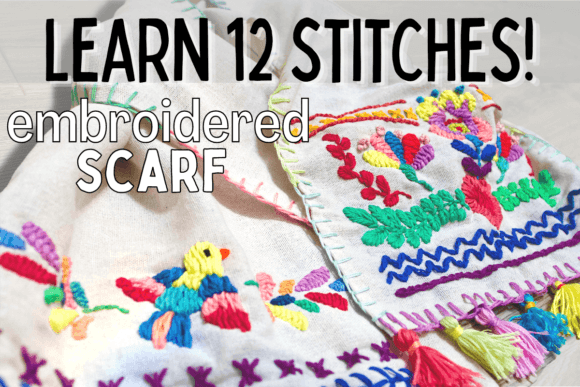
Review: 12 Embroidery Stitches for Holiday Scarves
As an experienced embroidery designer preparing my shop for the upcoming holiday rush, I am constantly scouting for digital embroidery file resources that offer both educational value and immediate commercial appeal. When I first encountered Learn 12 Embroidery Stitches on a Scarf, my initial reaction was one of cautious optimism. This isn't just a standard motif; it is a comprehensive class designed to elevate the skill set of the maker while producing a tangible, high-value handmade gift. The seasonal mood evoked by this concept is undeniably cozy and nostalgic, tapping directly into the consumer desire for warmth and personal touch during the winter months.
Evaluating Seasonal Appeal and Emotional Tone
The core strength of Learn 12 Embroidery Stitches on a Scarf lies in its versatility. While the title suggests a specific garment, the techniques taught are applicable across a vast range of seasonal embroidery projects. The emotional tone is intimate and inviting. In a market saturated with mass-produced items, customers are seeking products that tell a story. By mastering these twelve distinct stitches, a creator can produce items that feel premium and artisanal. Whether the aesthetic is rustic, modern, or elegant, the ability to combine textures through stitching adds a layer of sophistication that flat prints simply cannot achieve.
For the Etsy seller or small shop owner, this resource acts as a bridge between learning a craft and selling a finished product. The design feels festive without being overly themed, meaning it won't gather dust in January. It strikes a balance between playful creativity and serious craftsmanship, making it ideal for buyers looking for unique holiday gifts or treats for themselves.
Real-World Applications Beyond the Scarf
Although the class focuses on a scarf, my review process involves imagining how these techniques translate to other best-selling holiday categories. The stitch combinations taught here are perfect for sweatshirt embroidery, where texture adds weight and value to a simple cotton blend. Imagine a limited-edition drop of family matching sweaters featuring these intricate stitch patterns along the cuffs or collar.
Furthermore, these techniques are excellent for home decor. A kitchen towel embroidery project using these stitches could transform a basic linen towel into a cherished heirloom. The same logic applies to pillow cover designs, where varied stitch heights create shadow and depth, enhancing the visual appeal under holiday lighting. For those creating embroidered patch collections, understanding how to layer these twelve stitches allows for the creation of complex, badge-style decorations that can be ironed onto coats or tote bags.
In terms of holiday embroidery specifically, these methods work beautifully on ornaments. A small hoop application of these stitches on felt or wool creates a tactile ornament that stands out against glass and plastic competitors. The potential for personalized gift bundles is immense; a customer could purchase a kit that includes the materials to learn these stitches and create their own set of coordinated holiday items.
Performance in Selling Situations
When considering how Learn 12 Embroidery Stitches on a Scarf performs in real selling scenarios, the focus shifts to presentation and perceived value. For craft fair displays, items showcasing these varied stitches draw the eye because they invite touch. Customers love to feel the texture of hand-guided or machine-mimicked hand stitches. For online listings, the key is in the printable mockup and photography. Close-up shots that highlight the interplay of the different threads and stitch directions are essential for converting browsers into buyers.
This resource also supports the creation of "limited edition" apparel drops. By varying the thread colors and fabric choices, a single set of learned techniques can yield dozens of unique SKUs. This flexibility is crucial for maintaining fresh inventory throughout the long holiday shopping period. It builds customer trust, as the consistency of quality across different products demonstrates a high level of skill and attention to detail.
Critical Considerations for Production
However, no design review is complete without addressing potential pitfalls. There are specific areas where caution is required when applying these techniques to commercial products. First, consider the hoop size. If adapting these scarf patterns to smaller items like baby bibs or curved caps, ensure the stitch count fits within the available area without crowding. Tiny lettering combined with dense stitch patterns can lead to readability issues and thread breaks.
Fabric choice is equally critical. While scarves often use stable wovens, applying these stitches to stretchy garments requires careful attention to stabilizer selection. Without proper backing, the complex interplay of twelve different stitches could cause puckering or distortion after washing. Similarly, when working on thick towels or dark fabrics, test the stitch density thoroughly. Dark fabrics may require an underlay or specific thread weights to ensure the design pops, while thick loops on towels can swallow finer details.
Metallic threads, often used for holiday flair, should be tested extensively. Some of the more intricate stitches taught in this class might fray or break if the metallic filament is too brittle for the specific motion required. Always run a test sample on the exact fabric texture you intend to sell to verify durability, especially for items that will undergo repeated washing.
Designer Notes and Final Verdict
From a practical standpoint, integrating Learn 12 Embroidery Stitches on a Scarf into a seasonal collection requires strategic planning. My advice to fellow designers is to first test thread colors on both light and dark fabrics to build a reliable palette guide. Create realistic mockups that show the product in a lifestyle setting—draped over a chair, worn in the snow, or folded as a gift—to maximize engagement.
It is vital to review small details after stitching the test samples. Look for any gaps in coverage or uneven tension that might detract from the premium feel. Plan matching color palettes that align with current holiday trends, such as deep evergreens, cranberries, or classic neutrals. Most importantly, before listing any finished product derived from this instruction, confirm the commercial licensing terms. Since this is offered as a class, ensure that selling the physical items you create using these techniques is permitted under the provider's agreement.
Since specific technical details like exact file formats, precise hoop dimensions, or definitive license terms were not explicitly provided in the brief description, I strongly advise readers to verify these specifics with the instructor, Nicole Clark, before committing to large-scale production. Once confirmed, however, this class represents a powerful tool for any commercial embroidery business looking to expand their holiday offerings with depth, texture, and genuine artisanal charm.
In conclusion, Learn 12 Embroidery Stitches on a Scarf is more than just a tutorial; it is a gateway to higher-value product creation. For the small shop product lineup, it offers the differentiation needed to stand out in a crowded marketplace. By leveraging these techniques across various categories—from tote bag design to home linens—designers can create a cohesive, emotionally resonant collection that captures the true spirit of the season.