Review: The Decorative Celtic Tree of Life Design
As a designer who spends more time staring at stitch maps than most people spend looking at actual trees, I approach every new machine embroidery design with a mix of optimism and skepticism. We have all downloaded a file that looked magnificent on the screen only to turn into a bird's nest of thread breaks and puckering on the hoop. Today, I am taking a close look at the Decorative Celtic Tree of Life, a piece from the Forest Trees category that promises to bring whimsy and charm to various textiles. My goal here is not just to tell you it looks pretty, but to determine if it holds up under the pressure of real-world production for small shop owners and serious hobbyists.
First Impressions: Mood and Visual Personality
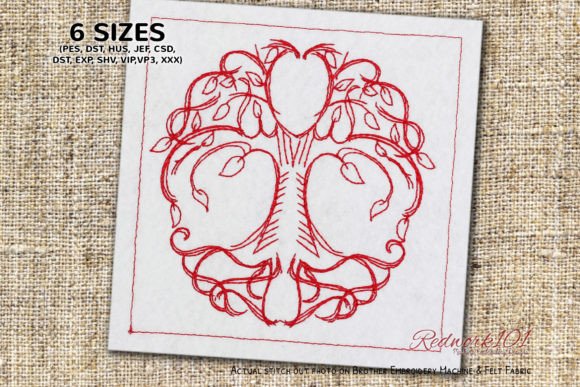
The moment I loaded the preview of the Decorative Celtic Tree of Life, the immediate sensation was one of grounded elegance. Unlike some nature-themed motifs that rely heavily on realistic leaf textures or overly complex shading, this design leans into the symbolic. The interlacing roots and branches create a continuous loop, a hallmark of Celtic art that translates surprisingly well into embroidery. The layout feels balanced, with a central trunk anchoring the composition while the canopy spreads out with a gentle, organic flow.
What stands out most is the potential for thread colors to define the mood. While a traditional green and brown palette works for a rustic look, I immediately envisioned this in monochromatic schemes—perhaps a slate grey on a cream linen or a deep navy on a heather grey sweatshirt. The design does not scream for attention; rather, it invites a closer look, which is exactly what you want for a handmade product intended to feel premium and thoughtful.
Real-World Application: The Tote Bag Test
To truly evaluate an embroidery file, you have to imagine it on a finished object. I mentally placed this design on a canvas tote bag design project I have been planning for a local farmer's market. The circular nature of the tree fits perfectly within the standard square or rectangular hoops often used for bags. In this scenario, the Decorative Celtic Tree of Life serves as a central emblem, suggesting growth and connection—themes that resonate deeply with eco-conscious shoppers.
However, the application extends beyond bags. Imagine this as sweatshirt embroidery on the left chest or centered on the back. The density appears manageable enough that it wouldn't make the fabric stiff or uncomfortable against the skin, a common complaint with large fill designs. For baby embroidery projects, such as a nursery blanket or a onesie, the soft curves of the branches avoid the sharp, jagged edges that can sometimes irritate delicate skin. It also shines as a personalized gift; adding a name in a complementary script font below the roots could create a stunning heirloom piece for a wedding or a new home.
Navigating Fabric Challenges and Stitch Density
While the aesthetic is strong, practical execution requires caution. The intricate weaving of the Celtic knots implies a reliance on precise running stitch and potentially fine satin stitch work for the outlines. If you are working with textured fabrics like heavy towels or waffle weave, those fine details might get lost. I would advise against using this on highly textured surfaces unless you are aiming for a distressed, vintage look where some definition is sacrificed for character.
Furthermore, stitch density is a critical factor. Although the description mentions it comes with multiple formats, you must verify the specific density settings for your machine. On stretchy fabrics like jersey knits, a dense fill stitch area in the trunk could cause puckering if the stabilizer isn't robust enough. For a project like a cap, where the surface is curved and the fabric is often thick twill, you need to ensure the design isn't too wide, or the edges will distort around the crown. Always test on scrap fabric first. This is non-negotiable for any professional craft business.
Commercial Viability for Etsy Sellers and Boutiques
For the Etsy seller or boutique owner, the value of a design lies in its versatility and the perceived quality of the finished product. The Decorative Celtic Tree of Life has high "giftability." It appeals to a demographic that values symbolism and artisanal quality. When creating printable mockups for your online shop, this design photographs well because of its clear silhouette. It creates a strong brand consistency if you are building a line of nature-inspired custom apparel or home decor.
However, before listing items featuring this design, you must scrutinize the license. The product description hints at commercial use ("Embellish your fabrics..."), but terms vary wildly between designers. Does the license allow you to sell the physical embroidered patch or garment? Can you sell the digital embroidery file itself? Never assume. Clarifying these terms protects your small shop product line from legal issues and builds trust with your customers who expect authentic, properly licensed design assets.
Technical Notes for the Professional Embroiderer
To get the best results from the Decorative Celtic Tree of Life, consider these technical adjustments:
- Stabilizer Selection: Use a cut-away stabilizer for garments that will be washed frequently, like t-shirts and hoodies. For home decor items like pillow covers that see less agitation, a tear-away might suffice, but err on the side of stability for intricate knot work.
- Thread Contrast: Test the design in black and white mockups first. If the details disappear in grayscale, your thread color contrast on the actual fabric might be too low. High contrast ensures the Celtic knots remain visible from a distance.
- Hoop Size Verification: Confirm the maximum dimensions of the file against your available hoops. If the design is large, you may need a jumbo hoop, or you might need to scale it down, ensuring you do not compromise the integrity of the tiny connecting lines.
- Fabric Texture: Avoid using this on very thin or slippery fabrics like silk chiffon without significant backing support. The weight of the stitches could drag the fabric out of shape.
In conclusion, the Decorative Celtic Tree of Life is a compelling addition to the Forest Trees collection. It balances artistic flair with structural soundness, making it a viable candidate for everything from holiday embroidery gifts to year-round boutique merchandise. Its success, however, depends entirely on the preparer's attention to detail regarding fabric choice, stabilization, and licensing. Treat it with the respect of a complex applique design even if it isn't one, and it will reward you with a stunning, professional result that enhances your reputation as a skilled maker.